


A freelance proposal template kit: a ten-section proposal, a one-page estimate, a statement of work, a project recap and a rate card — with the wording that wins the job and the exclusions that protect the invoice.
The proposal is not lost on the price. It is lost on page one.
Three proposals land in the same inbox. They are read diagonally, at the end of a long day, by someone who is not the person you met. Two of them open with a company profile and a list of services. One opens with a paragraph describing the reader’s own situation, in the reader’s own words, well enough that they recognise it.
That one gets the work — not because it is longer or better designed, but because by the second paragraph the reader has stopped comparing and started agreeing. Everything else in a proposal exists to avoid undoing that.
What is inside The Proposal Kit
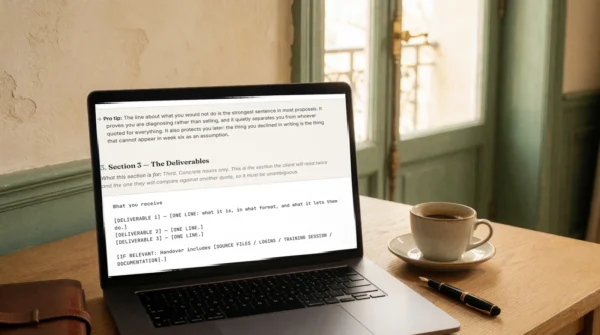
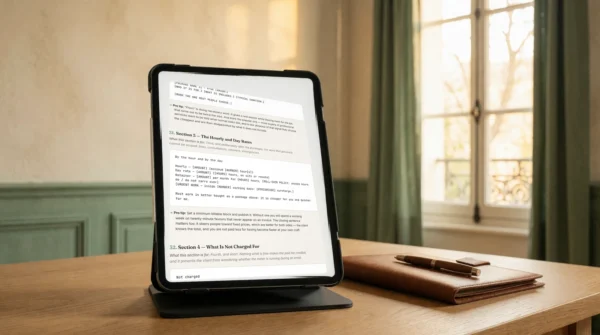
Five documents. Thirty-four sections, written out in full. Every section gives you the finished wording, what the section is for, and the one detail that changes the answer.
- The Proposal — ten sections in the order a reader actually processes them, with the price fourth from last and the exclusions immediately after it.
- The Estimate — six sections on one page, built to be sent within a day of the conversation, with a validity date and the variables that would change the figure.
- The Statement of Work — seven sections, including the only document in the kit written to be disagreed with, before the work starts rather than after it.
- The Project Recap — five sections sent with the final invoice: what was asked for, what was delivered, what changed, what to look at next.
- The Rate Card — six sections that answer “how much do you charge?” in two minutes instead of three days, with a price review date built in.
The sections nobody writes, and what they are worth
“What is not included.” The paragraph everyone deletes because it feels negative to send. It is the difference between a scope conversation in week one and an unpaid invoice in week nine — and clients read it as precision, not as refusal.
“What I need from you, and by when.” Every project that overruns involves at least one client-side dependency. Dated in advance, a delay becomes arithmetic — a day for a day — instead of an argument about competence.
“Approvals are given by [NAME].” One line, asked for in week one while everyone is still delighted with you, and almost impossible to obtain in week five.
Who The Proposal Kit is for
Anyone who quotes for work without a sales department: freelancers, consultants, studios, agencies, trades, coaches and small firms. It is written for services priced between a few hundred and a few tens of thousands — the range where a proposal is read by one or two people rather than assessed by a procurement process.
What The Proposal Kit is not
It is not a contract pack and it is not legal advice. These are commercial documents: they set out what is being done, for how much, by when, and what is excluded — clearly enough to prevent most disputes. Payment terms, liability, intellectual property and termination depend on your country and your situation, and that is a conversation for a professional.
It is also not a design template. It is 24 pages of wording with 220 blanks in square brackets, which you paste into whatever you already send from — a document, an email, or your own letterhead.
Included with The Proposal Kit
- The Proposal Kit — 24-page PDF, 5 documents, 34 sections written out in full.
- A pro tip on every section: the specific detail that changes the client’s answer.
- Free updates to this edition, sent to the email you buy with.
Instant download. One-time purchase, no subscription. Licensed for your own business and for proposals you write on behalf of clients.
Reviews
There are no reviews yet.